How Actors Recover from Mistakes on Set

Mistakes happen constantly on film sets. Lines disappear, marks are missed, props drop, cues arrive late, and scenes do not land as expected. With dozens of moving parts, perfection on the first attempt is not the goal. What matters is how you recover.
A mistake becomes damaging mainly when the actor carries it into the next take. The missed line itself may cost seconds. Shame, frustration, explanation, and loss of focus can cost minutes and change the energy of the room. Recovery is therefore not pretending nothing happened. It is returning attention to the task quickly.
Film production is designed around repetition. Cameras need another angle, sound catches a noise, focus needs adjustment, or the director wants a different rhythm. Actors are not uniquely failing when a take resets. They are participating in a process where many pieces are refined through multiple attempts.

Do not turn one error into five minutes
Mentally replaying the mistake, apologizing repeatedly, or becoming visibly frustrated takes you out of the scene and slows the crew. Take a breath, receive any adjustment, and return to the work.
A short reset can be physical. Exhale, release tension in the jaw and shoulders, return to the mark, and reconnect with the scene partner. If clarification is needed, ask one direct question. Avoid turning the set into a public analysis of why the error occurred. The goal is not to prove that the mistake was understandable. The goal is to make the next take available.

Every take is another option
Directors often want several versions even when nothing went wrong. One take may be quieter, another more emotional, and another may exist for timing. A missed line does not destroy the scene. Repetition can uncover the strongest moment.
Multiple takes are creative material. A director may already have a usable version and still ask for another to explore pace, intensity, or editorial options. Treat each attempt as a fresh event rather than a test of the previous one. That mindset reduces the feeling that every cut contains a judgment about the actor.

Stay emotionally available
If something changes mid-scene, resist panic. Listen, remain in character, and respond truthfully. Directors trust performers who can adapt without shutting down or stepping outside the moment every time something is imperfect.
Sometimes staying in the scene produces the most truthful moment. A prop falls or a line changes slightly, and the character can respond without the actor announcing the disruption. Continue when it is safe and when the director has not called cut. The ability to absorb an unexpected event can create behavior that no rehearsal could manufacture.

Everyone makes mistakes
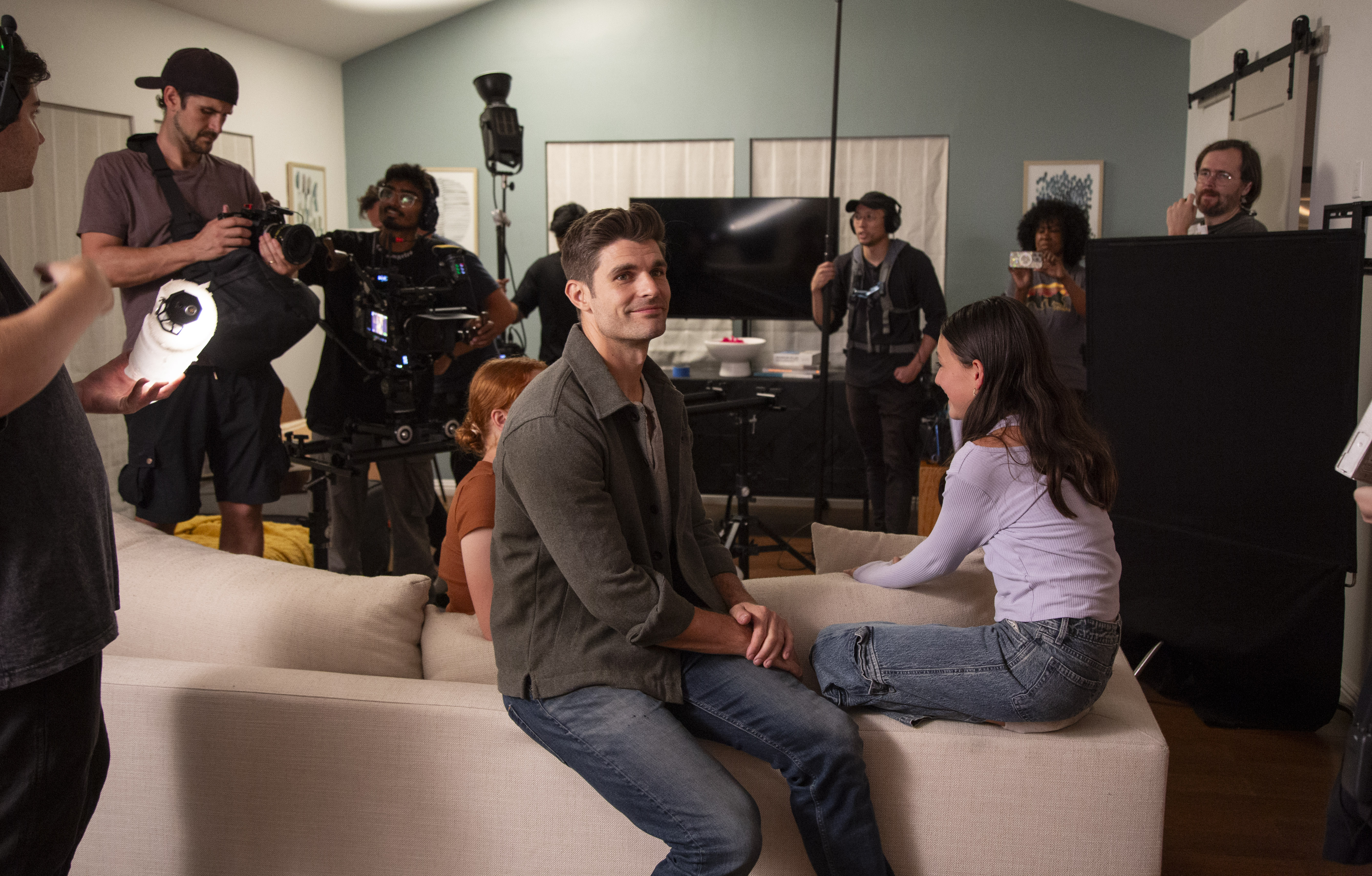
A light shifts, a microphone enters frame, focus misses, or the camera needs adjustment. Filmmaking expects repetition. Skip the extended apology, clear your mind, reset your focus, and go again. Resilience is part of acting professionalism.
Notice how calmly crew members handle their own corrections. Focus may miss, a flag may enter frame, or a sound cue may fail. The department makes the adjustment and goes again. Actors can adopt the same practical attitude. Responsibility means acknowledging what needs to change, not performing extended guilt.
Practice the reset before you need it
Build a simple recovery routine in rehearsal so it is familiar under pressure: breathe, receive the note, locate the immediate need, reconnect, and begin. Resilience does not mean never feeling embarrassed. It means the feeling does not take over the work. Directors remember actors who can remain generous and focused when the day becomes imperfect.
Watch the original video
This article was adapted and expanded from The Filmmaker's Mindset video: https://www.youtube.com/watch?v=vsqViOMvkBA

Comments